Iron and Manganese
The contaminant we see most often
Over more than 50 years, the contaminant WETS has addressed most frequently is iron and manganese in groundwater. Both are common elements in the earth’s crust, carried by water as it passes through soil and rock. Because well water is typically not exposed to oxygen, dissolved iron and manganese oxidize on exposure to air, forming insoluble reddish-brown particles. Even small amounts can cause difficulty in process or industrial use, and while many waters containing iron also contain manganese, iron is the more common of the two.
Aesthetic, not a health risk
The EPA classifies iron and manganese as secondary drinking water contaminants — not a risk to public health, but a source of aesthetic concern related to taste, appearance, and staining of laundry and plumbing fixtures.
Other natural contaminants — organics, phosphates, complexing ligands, ammonia, and hydrogen sulfide — can bind with iron and manganese or interfere with their oxidation rates, and arsenic is often present alongside them. For this reason, a WETS pilot study is typically recommended to confirm the proper treatment approach, particularly where manganese and/or arsenic are also present.
Iron
Iron in natural water supplies may occur in several forms, including ferrous bicarbonate, ferrous carbonate, ferric hydroxide, ferrous hydroxide, ferrous sulfate, and organic iron.
Ferrous bicarbonate — a soluble, colorless salt — is the most common form; its solubility rises with the water’s free carbon dioxide content, and in cold, CO2-saturated water it can exceed 150 ppm. Such water appears clear when first drawn but clouds and deposits a yellowish-to-brownish ferric hydroxide precipitate on exposure to air. Removing soluble ferrous bicarbonate requires oxidizing and precipitating the iron as ferric hydroxide.
WETS has had strong success using aerators for iron removal — aeration reduces the water’s free carbon dioxide content, which simultaneously raises pH, and the resulting precipitates are captured in downstream sedimentation and filtration. Chlorination can also help oxidize ferrous bicarbonate to ferric hydroxide, though less efficiently: while 1 ppm of oxygen oxidizes about 7 ppm of ferrous iron, 1 ppm of chlorine oxidizes only about 1.6 ppm. Given the higher cost of chlorine-based oxidation, aeration is the more economical method.
Organic iron — iron bound with decomposed vegetation (tannins or lignins) that gives water a weak tea or coffee color — can be removed through chlorine oxidation followed by mechanical filtration, or by a scavenger anion resin.
Manganese
Manganese removal often poses more of a challenge than iron. The soluble manganous salt oxidizes more slowly and may require stronger oxidants or elevated pH to form the insoluble manganic salt, and chlorine is less effective against manganese than iron. Proper coagulant and flocculant selection can improve manganese removal in the filtration step, and media coated with manganese oxide — such as greensand — is effective at removing both manganese and iron.
For this reason, a WETS pilot study is almost always recommended to identify the proper solution to a manganese problem.
Secondary federally, enforceable in Texas
Iron and manganese concerns are primarily aesthetic — related to taste, appearance, and staining — and both are classified as secondary drinking water contaminants. As secondary standards, EPA MCLs are not federally enforceable, though states may adopt them as enforceable standards, as Texas has done: 0.3 mg/L for iron and 0.05 mg/L for manganese.
Public Health Concern
Iron and manganese are not classified as health risks, but both carry secondary standards because of the aesthetic and taste issues they cause, along with the orange/brown staining associated with iron and the dense black staining associated with manganese. Recent research does suggest that manganese exposure at or above the current standard may be linked to developmental issues in young children.
Aeration followed by filtration
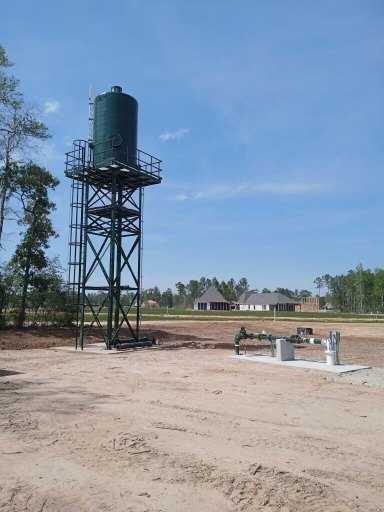
For iron and manganese removal, WETS typically uses aeration followed by filtration, with coagulant and flocculant addition as needed. Our pilot studies determine the best method for reaching target levels — since arsenic is often present alongside iron and/or manganese, our dual filter media, dosed with the proper coagulant and flocculant, is designed to precipitate all three together. This approach economizes chemical dosing and supports TCEQ approval, and because we don’t offer an off-the-shelf product, every solution is tailored to the specific plant.
Solutions to Your Water Treatment Needs
Whether you want a new water treatment system installed, need your current one inspected and repaired, or just want a free quote, contact the WETS LLC. With years of experience in the industry, our skilled team members are trained and knowledgeable with a variety of leading water equipment and products. Our certified water purification experts are here to help.
Contact Us