Cation resins
Cation resins are negatively charged and attract positively charged ions.
Ion exchange water treatment is a specialized technology used in water and wastewater treatment to remove dissolved ions and contaminants.
All natural waters contain dissolved salts that dissociate into charged ions — positively charged cations and negatively charged anions.
Ion exchange resins act much like powerful magnets, attracting and holding contaminating mineral ions from the source water through electromagnetic attraction.
Cation resins are negatively charged and attract positively charged ions.
Anion resins are positively charged and attract negatively charged ions.
Each type naturally draws a distinct set of minerals.
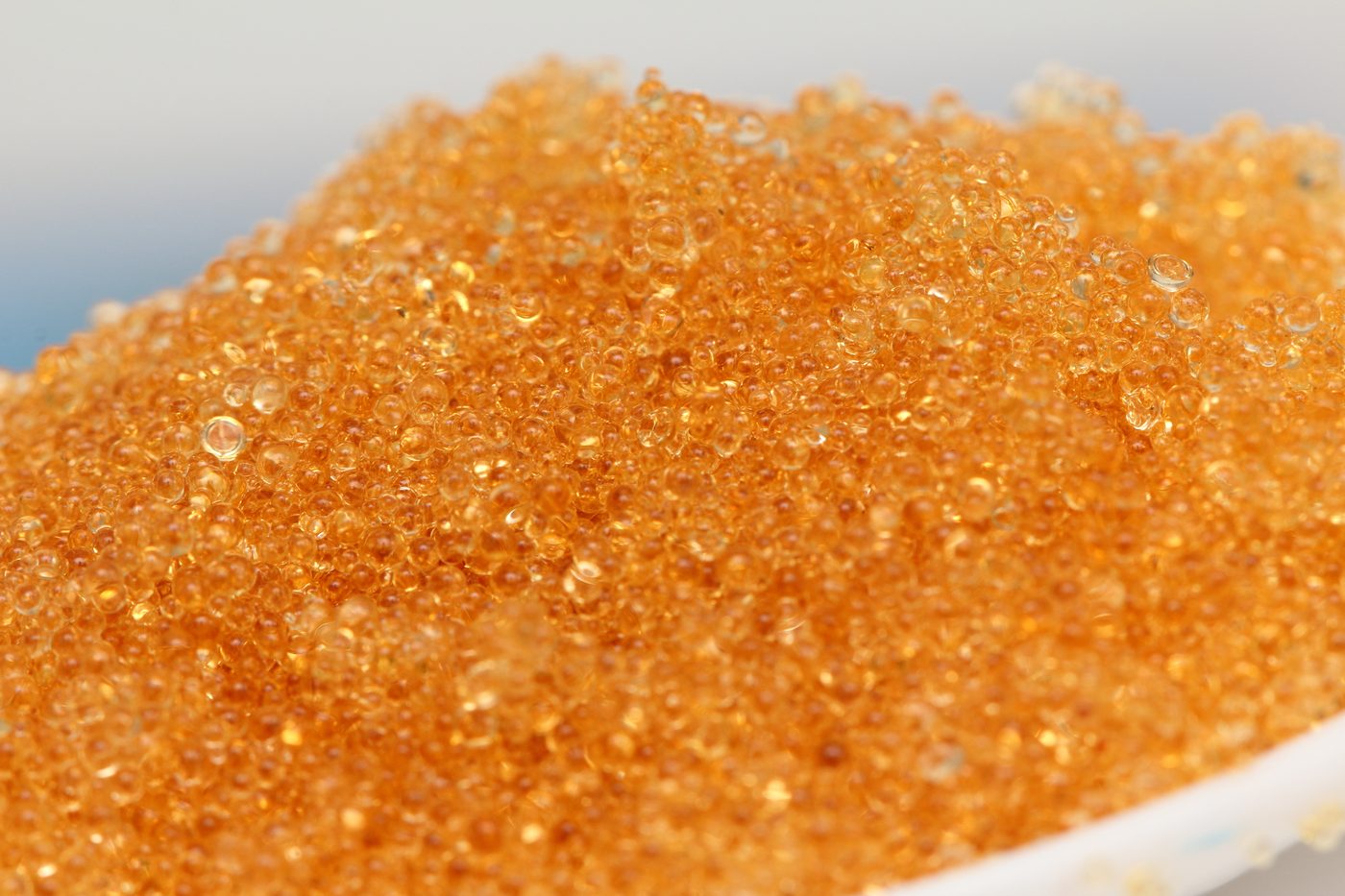
The polymeric resin beads are engineered with thousands of tiny cracks to maximize surface area. As source water passes through the resin beads, mineral-bearing molecules cling to their many surfaces.
IX resins vary in shape, size, and structure — most systems use a bed of tiny, porous microbeads, typically 0.25 to 1.25 millimeters in radius, though some applications, such as electrodialysis, use a sheet-like mesh resin instead.
This exchange process is reversible: once fully loaded, the resin can be regenerated using a concentrated salt, acid, or caustic solution that flushes out the accumulated minerals and restores the resin to like-new condition.
Regeneration for ion exchange systems is more complex than for typical filtration operations, and is normally fully automated.
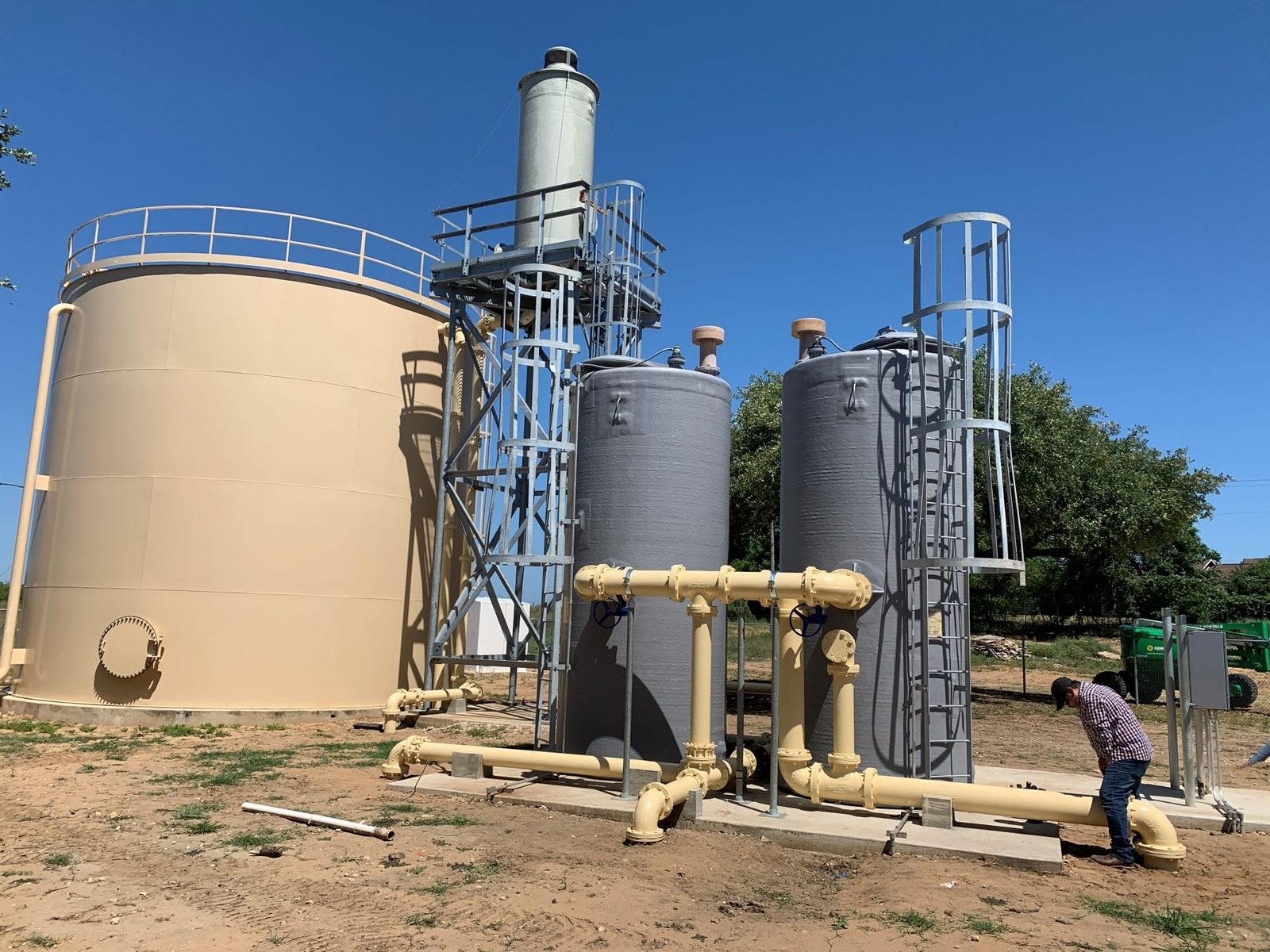
WETS has designed and installed ion exchange systems for water hardness removal and for radionuclide removal, including radium treatment.
For hardness removal, ion exchange replaces calcium and magnesium ions with sodium ions on a strong acid cation resin. Regeneration uses a concentrated sodium chloride brine solution (typically 8 to 12 percent) to displace accumulated hardness ions from the resin.
Radionuclides present larger ions than typical ion exchange applications, and specialized resins have been developed to perform better in these services — standard resins tend to foul more easily with these larger ions, affecting performance over time and complicating end-of-life landfill disposal.
Specialty resins feature an activated outer shell and inert core, improving regeneration capability and overall performance while reducing fouling and improving disposal suitability.
While widely used for softening, ion exchange systems serve numerous other applications, including metals removal and dealkalization.
A well-designed system must be tailored to each application’s treatment stream composition, targeted contaminants and removal goals, and operating and maintenance cost considerations.
Our team of professional engineers brings decades of experience developing customized ion exchange designs for our clients.
From pilot study customization through conceptual and detailed design, equipment manufacture, and installation, WETS stands ready to develop the optimal solution to your water treatment challenge.
Contact Us