Serving Texas & Surrounding Areas Since 1976
01 Resources

Water Basics

Five contaminant categories pH, alkalinity & hardness Scaling & corrosion indices
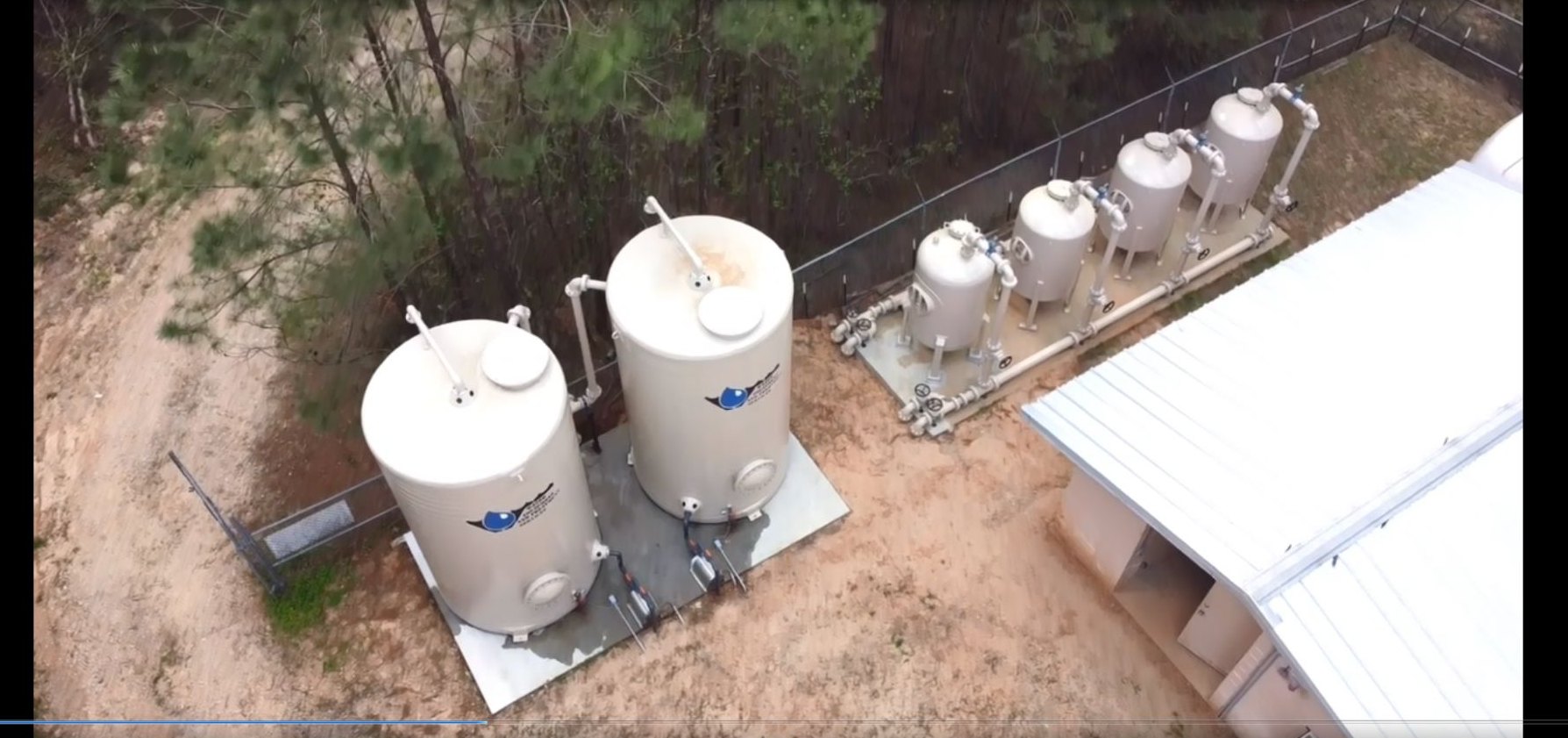
WETS treatment plant Aerial view of a WETS water treatment plant
02 Overview

Five categories of contaminant

WETS’ primary function is designing and providing water treatment equipment for removing impurities from ground and surface water. This overview covers the nature of these impurities and how they affect the physical properties of water.

Water contaminants can be grouped into five categories:

  • Dissolved mineral matter — most abundant are bicarbonates, sulfides, and chlorides of calcium, magnesium, and sodium; iron and manganese occur at low concentrations but remain of particular interest due to their impact
  • Dissolved gases — carbon dioxide, oxygen, methane, and hydrogen sulfide are of particular interest
  • Sediments and turbidity — turbidity refers to insoluble suspended matter that reduces water clarity; sediments are matter that will settle out if allowed to
  • Color, taste, and odors (organic matter) — in surface water, these are typically tied to dissolved or suspended organic matter
  • Microorganisms — historically responsible for large numbers of deaths, until the discovery that chlorine treatment effectively destroys them, marking a major public health advance. Microorganisms are common in surface water but have little presence in groundwater, though groundwater is still chlorine-treated to prevent contamination in distribution systems
Grouped another way

Water contaminants can also be usefully grouped by physical form: dissolved, colloidal or non-settleable solids, and suspended or settleable solids.

03 Water pH

Acidic, neutral, basic

pH is central to water treatment because it governs the solubility of many chemical constituents — including those considered undesirable or harmful — and affects the performance of treatment chemicals such as coagulants. pH measures how acidic or basic water is, on a scale of 0 to 14, with 7 as neutral; values below 7 indicate acidity, values above indicate a base.

The pH scale from 0 to 14, with 7 neutral, showing pure water at 7, water in equilibrium with the atmosphere near 5.2, and the typical groundwater range of 6 to 8.5 02468101214 ACIDIC NEUTRAL 7 BASIC GROUNDWATER 6 TO 8.5

More precisely, pH reflects the relative concentration of free hydrogen (H+) and free hydroxyl (OH-) ions — water with more free hydrogen ions is acidic, more free hydroxyl ions is basic, and equal concentrations yield a neutral pH of 7. Pure, perfectly neutral water doesn’t occur in nature, since dissolved gases or minerals always shift ion concentration somewhat.

pH is reported on a logarithmic scale, where each unit represents a tenfold change in acidity or basicity — water at pH 5 is ten times more acidic than water at pH 6. Extreme pH values can be detrimental: high pH can produce a bitter taste and reduce chlorine’s effectiveness, while low pH corrodes or dissolves metals and other materials.

In natural water

Pure water has a pH of 7, though in equilibrium with the atmosphere it drops to roughly 5.2 due to dissolved carbon dioxide. Groundwater typically falls in the 6 to 8.5 range. While carbon dioxide has the greatest influence on natural water pH, acidity can also arise from mineral acids such as H2SO4 and HCl — since carbon dioxide/carbonic acid alone can’t push pH below 4.5, natural water below that threshold indicates mineral acid presence. Groundwater, unlike open water, isn’t limited by atmospheric CO2 partial pressure and often reaches CO2 concentrations of 30 to 50 mg/L, which readily dissolves calcium or magnesium from surrounding soils — commonly producing water with high calcium bicarbonate content.

04 Alkalinity

Buffering capacity

Alkalinity measures water’s capacity to resist a shift toward greater acidity, arising from a high concentration of carbon-based mineral molecules in solution. In natural water supplies, the ions of interest are carbonates and bicarbonates, with bicarbonates present in nearly all natural water supplies.

Alkalinity functions as a buffering capacity — water with zero alkalinity sees an immediate pH drop when acid is added, while alkaline water resists that drop until its buffering capacity is exceeded. In groundwater, alkalinity originates from the soil and bedrock the water passes through, primarily rocks containing carbonate, bicarbonate, and hydroxide compounds.

Water with high alkalinity is often described as hard, and low-alkalinity water as soft, though hardness and alkalinity aren’t strictly identical measures — for typical CaCO3, hardness reflects calcium content while alkalinity reflects the CO3 carbonate. In nature, alkalinity is especially important for aquatic life, buffering against rapid pH swings from events such as rainfall. The EPA doesn’t regulate alkalinity directly, but addresses it indirectly through total dissolved solids and pH standards under the Secondary Drinking Water Standards.

How total alkalinity is measured

Total alkalinity is determined by measuring the acid needed to bring a sample to pH 4.2 — in most natural waters, alkalinity is effectively carbonate (HCO3- and CO3-2) alkalinity, since other anions occur at low concentrations. Water corrosivity is typically a function of both alkalinity and pH.

05 Hardness

Dissolved metal ions

Hardness refers to dissolved metal ions in water, typically calcium and magnesium, along with contributing ions such as aluminum, barium, iron, manganese, and zinc, expressed as milligrams of calcium carbonate equivalent per liter and related to alkalinity.

Water hardness is commonly classified, based on equivalent calcium carbonate, as follows:

  • Soft: below 60 mg/L
  • Moderately Hard: 60 to 120 mg/L
  • Hard: 120 to 180 mg/L
  • Very Hard: above 180 mg/L

The main residential concern with hard water is precipitate formation, especially when heated — sometimes called “temporary hardness.” Historically, hardness was described through water’s soap-reacting capacity: hard water requires more soap to lather, since sodium/potassium soap converts to an insoluble non-detergent, producing the soap scum and dishwasher spotting associated with hard water.

Both calcium and magnesium are essential dietary minerals, and while food is the primary source, water can meaningfully contribute for some populations. Dissolved minerals also shape drinking water’s taste, with acceptability depending on individual familiarity and preference.

Corrosion and scaling are functions of hardness, pH, and alkalinity — hard water deposits scale (mainly calcium carbonate, magnesium hydroxide, and calcium sulfate) that clogs plumbing, boilers, and heat exchangers. Excessively hard water can carry its own corrosion tendencies, but unstabilized soft water is generally more corrosive, introducing metals such as copper, lead, zinc, and cadmium into drinking water.

Naturally soft water differs meaningfully from water softened via cation exchange (where calcium and magnesium are displaced by sodium): the former is more corrosive and typically requires stabilization, often through increased alkalinity and/or corrosion-inhibiting additives such as phosphates. Rainwater is typically soft, and groundwater softness issues are uncommon. Hardness isn’t directly regulated by the EPA, though it’s indirectly addressed through total dissolved solids standards.
06 Indices

Indices to Address Water Scaling and Corrosion

Assessing a water’s potential for scaling or corrosion is a complex function of pH, temperature, alkalinity, calcium concentration, and total dissolved solids (TDS). Several empirical indices have been developed to evaluate this potential, including the Langelier Index, the Ryzner Stability Index, and the Aggressive Index — with pH control remaining the most common method of corrosion and scale management in potable water distribution systems.

Langelier Index

The Langelier Index (or Langelier Saturation Index) approximates the degree of calcium carbonate saturation in water, calculated as the difference between actual and calculated pH — interpreted as the pH change needed to bring the water to equilibrium.

  • A negative Langelier Index (below -1) indicates under-saturation with calcium carbonate and a tendency toward corrosiveness in the distribution system
  • A positive Langelier Index (above +1) indicates over-saturation and a tendency to deposit calcium carbonate scale
  • An index near zero (-1 to +1) is preferred, indicating water that is neither corrosive nor scale-forming

The Langelier Index is calculated using pH, alkalinity, calcium concentration, total dissolved solids, and water temperature, and increases with temperature — meaning a positive index becomes more scale-forming as temperature rises.

Ryzner Stability Index

Developed in the 1940s to improve on the Langelier Index for predicting calcium carbonate scale, the Ryzner Stability Index uses total dissolved solids, temperature, calcium hardness, m-alkalinity, and pH, and — like the Langelier Index — is calculated as the difference between calculated and actual pH. A value above 6 indicates a tendency to form calcium carbonate scale; a value below 6 indicates a tendency toward corrosiveness.

Aggressive Index

The Aggressive Index was developed to assess water’s corrosive tendency toward asbestos cement pipe, though it’s also used more broadly, and is part of AWWA Standard C-400. Simpler and more convenient than the Langelier Index — though less accurate — it uses pH, calcium hardness, and alkalinity, without factoring in temperature or total dissolved solids. An index above 12 indicates non-aggressive, non-corrosive water; below 10 indicates extremely aggressive, corrosive water; values between 10 and 12 are considered moderately aggressive.

07 Turbidity

Relative clarity

Turbidity measures the relative clarity of a liquid — in water, a cloudy appearance caused by small suspended (colloidal or non-settleable) particles, measured by shining light through the water and gauging the intensity of scattered light reflected to a sensor.

Turbidity is both aesthetically undesirable and a potential health concern, either from the suspended particles themselves or because they shelter pathogens. The EPA’s National Primary Drinking Water Standards require that systems using conventional or direct filtration keep turbidity from ever exceeding 1 Nephelometric Turbidity Unit (NTU), with at least 95% of monthly samples at or below 0.3 NTU. Systems using other filtration methods must follow state limits, which must cap turbidity at no more than 5 NTU at any time.

1 NTU
Never exceeded — conventional or direct filtration
0.3 NTU
At least 95% of monthly samples at or below
5 NTU
State-limit cap for other filtration methods
08 Color

Colloidal suspensions and organic acids

Similar to turbidity, color relates to colloidal suspensions along with certain organic acids and neutral salts, but is primarily tied to contaminants of vegetable origin — making it more of a surface water issue than a groundwater one, though some shallow wells can be affected. An arbitrary standard scale measures color intensity based on concentrations of potassium chloroplatinate in water.

Excessive color is aesthetically undesirable and can stain laundry. The EPA regulates color under the Secondary Drinking Water Standards, with a Secondary Maximum Contaminant Limit (SMCL) of 15 color units, and it is generally reduced through coagulation, settling, and filtration.

09 Get Started

Solutions to Your Water Treatment Needs

Whether you want a new water treatment system installed, need your current one inspected and repaired, or just want a free quote, contact the WETS LLC. With years of experience in the industry, our skilled team members are trained and knowledgeable with a variety of leading water equipment and products. Our certified water purification experts are here to help.

Contact Us