Chemical Dosing
Common coagulants include aluminum sulfate (alum), ferrous sulfate (copperas), ferric sulfate, and ferric chloride. Coagulant aids (flocculants) — typically inorganic materials that accelerate coagulation and flocculation, producing quick-forming, dense, rapidly settling flocs — are especially useful for low-turbidity waters and include anionic polymer, non-ionic polymer, sodium silicate, bentonite, and calcium carbonate. Periodic jar testing helps maintain near-optimal coagulant feed rates.
Backwash
As filter media becomes plugged with solids and precipitates, headloss on the filter gauge rises, signaling the need to reverse flow and flush the media. Backwash expands the bed 30 to 50%, carrying off lighter floc and foreign matter while allowing sand particles to scour each other; it’s typically triggered by a headloss limit (roughly 4 psi), elapsed operating time, or filter effluent turbidity. Backwash water must be distributed uniformly across the filter’s full horizontal cross-section and must itself be clean, filtered water — sourced from parallel filter units or storage.
For municipal systems, backwashing is typically manual, though some systems are fully automated on a set schedule (often weekly). Ineffective backwash leads to permanent media fouling requiring eventual replacement, which has driven development of several enhancement techniques:
- Water-only backwash — simplest and most common, especially for smaller systems; clean water is pumped through the media at relatively high rates, ideally expanding the bed 20–50% to carry particulates out.
- Surface-wash sweeps — rotating sweep arms spray water at high velocity across the media surface, causing grains to collide and dislodge trapped contaminants.
- Sequential air scour and water — increasingly common over the last 30–40 years; air introduced below the media rises through it, creating high-energy contact between grains that significantly improves contaminant removal versus water-only or surface-wash methods alone. Water flow stops during the air phase, then resumes for normal backwash.
- Simultaneous air scour and water — combines air and water backwash concurrently, using the added energy from air to carry more contaminants out while maintaining water flow, allowing lower backwash rates with bed expansion driven by air lift.
Combined air-water backwash requires a media-retaining system on the backwash collection troughs to separate air and water flow and minimize media loss.
Typical nominal backwash rate is 15 GPM/ft², lower when surface washing is used; rate can be optimized via core sampling before and after backwash. A rate that’s too low won’t properly clean or expand the bed, while too high a rate disrupts it and reduces performance. Typical backwash duration is 8 to 10 minutes.
Sub-optimal backwash can produce mudballs — roughly one-inch spherical aggregates that form near the sand surface and gradually sink if unaddressed. Surface washing helps prevent their formation. Monitoring pressure trends in backwash supply lines is also important, since rising pressure signals reduced or plugged passages in the underdrain.
Filter media is designed with rough, jagged particles to minimize void fraction and maximize floc collection sites; the scouring action of backwash gradually smooths and rounds these particles over time, reducing performance and signaling the need for replacement. Typical media loss runs 0.5–1 inch per year, and periodic bed depth measurement — with topping off as needed — helps maintain filtration capacity and avoid shorter filter runs or contaminant breakthrough.
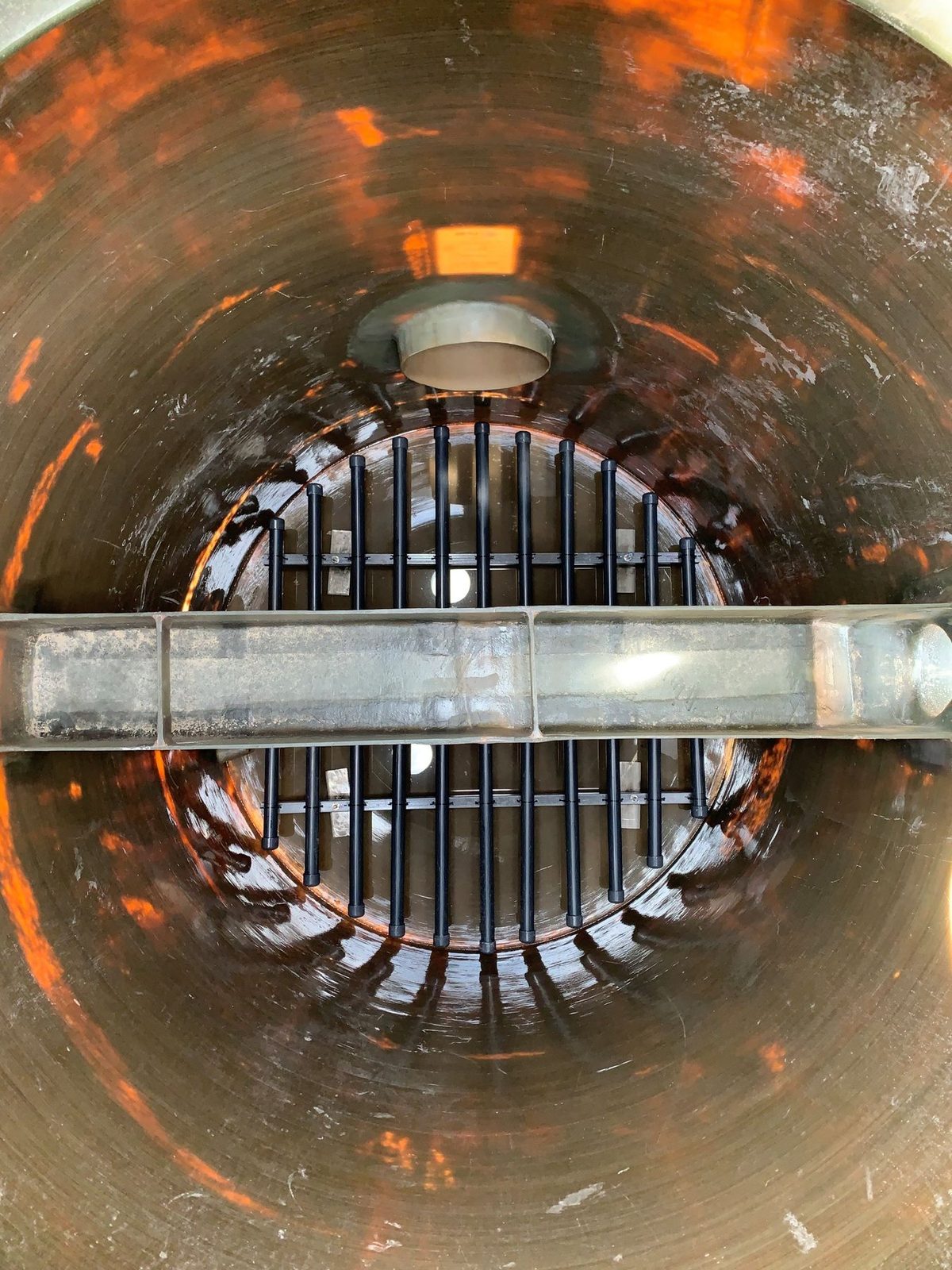
Wash-water troughs, placed above the filter media, collect wash-water, floc, and suspended matter during backwash and should sit slightly above the bed’s maximum expansion during washing.